
Life Insurance For Offshore Workers
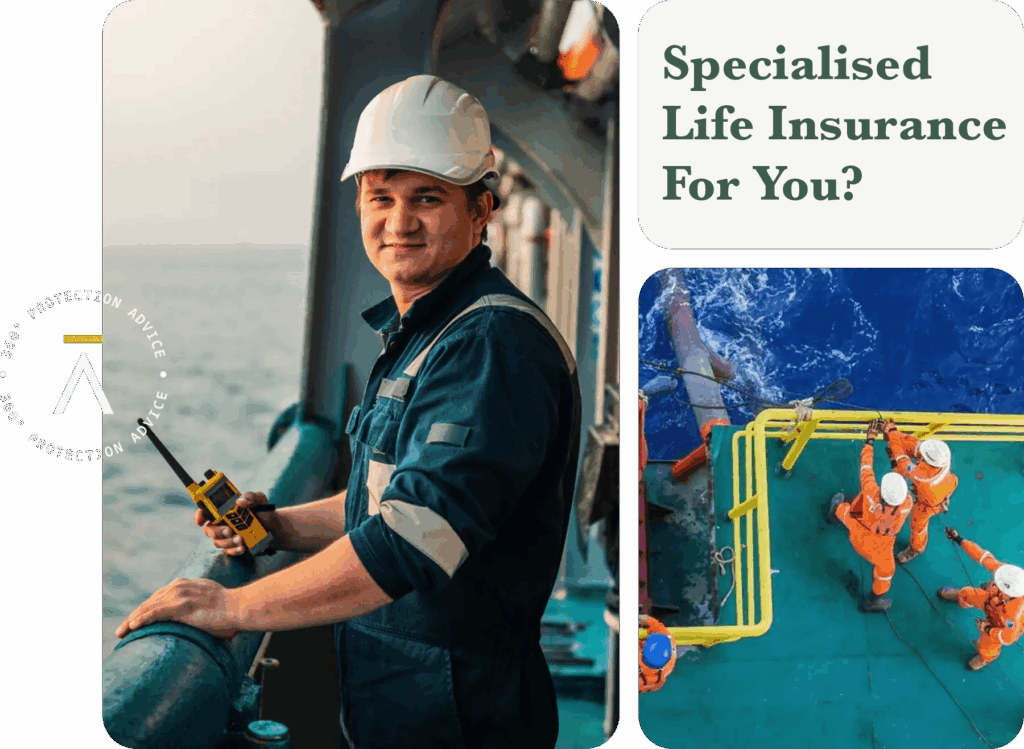
Whether you work on oil rigs, drilling platforms, vessels, FPSOs, or offshore wind farms, get life insurance that understands rotational work, high-risk roles, and offshore pay structures.
- FCA Regulated
- Whole of Market
- 4.8/5 Rating









- FCA Regulated
- 4.8/5 Rating
Protecting The People Who Work Where Others Can’t
Specialist life insurance and income protection for offshore workers, marine engineers, drillers, ROV pilots, rig crew, and offshore contractors. We understand rotations, hazard pay, overseas postings, and offshore risk classifications — where standard insurers fall short.
- Specialist rates for offshore and marine roles
- Cover that reflects offshore pay and allowances
- Simple process designed for rotational workers
The Competitive Edge
Why Generic Life Insurance
Fails Offshore Workers
After 15+ years advising offshore and high-risk workers, we’ve seen how standard policies consistently miss the mark.
- The Problems
Offshore roles are misunderstood
Many insurers automatically load premiums or decline cover simply because your role is classed as “hazardous” — without understanding your actual duties, safety protocols, or experience.
Rotational income isn’t assessed properly
Day rates, offshore allowances, hazard pay, and overseas contracts are often ignored, leading to undervaluation or inadequate cover.
Overseas work creates exclusions
Generic policies may restrict cover while you’re offshore or working outside the UK — sometimes without you realising.
Applications are slow and outdated
Long forms, unnecessary medical exams, and repeated back-and-forth don’t work when you’re on rotation or offshore for weeks at a time.
- Our Solutions
Offshore-aware underwriting
We understand offshore job categories, safety standards, rotations (2/2, 3/3, 4/4), and how insurers assess real offshore risk.
Proper offshore income assessment
We factor in day rates, offshore allowances, hazard pay, overseas contracts, and continuity of work — not just PAYE figures.
Overseas & offshore cover clarity
We ensure your policy covers you while offshore and abroad, with no hidden exclusions.
Process built for rotational workers
Online applications in under 15 minutes, minimal medical requirements, and fast decisions — even while you’re offshore.
Real Cover For Offshore Careers
Every professional has a unique path. We design policies that scale with your specific trajectory and lifestyle.
comprehensive coverage options
Protection That Works Offshore
From newly qualified offshore crew to senior supervisors and contractors,
we provide cover that protects your income and family — onshore and offshore.
Term Life Insurance
Straightforward protection designed for offshore risk classifications.
Critical Illness Cover
Tax-free lump sum if you’re diagnosed with a serious illness — vital for physically demanding offshore roles.
Income Protection
Protect your income if injury or illness prevents you from passing medicals or returning offshore.
Offshore Contractor Cover
Policies designed for contract-based and rotational work, even with gaps between jobs.
Family Income Benefit
Provides your family with a regular monthly income instead of a lump sum — ideal for long-term offshore security.
Mortgage Protection
Ensure your mortgage is covered if the worst happens while you’re offshore or overseas.
How it works
Cover Sorted
Before You Fly
We respect the realities of offshore life. Our process works around your rotation.
Step 01
Discovery
A short call with a specialist adviser who understands offshore work, rotations, and risk profiles. No pressure — just expert guidance.
Step 02
Market Analysis
We analyse your partnership structure, income profile, existing coverage, and tax position to design optimal protection recommendations.
Step 03
Trust Setup
We help set up a Discretionary Trust (for tax efficiency) and activate your cover — even if you’re offshore.

The advantage
Why Offshore Workers
Choose, Specialist Cover
Beyond just a policy-protection designed around the unique demands, aspirations, and earning potential of professional services careers.
- Tailored policies built around your income, career, and lifestyle
- Independent advice with access to the whole of the UK market
- Cover designed for high-risk and overseas work
- Advisers who understand offshore safety and classifications
- Transparent recommendations with no obligation to proceed
- Peace of mind knowing your cover works wherever you work
100%
Specialist focus on professionals
We Understand Your Career
Worldwide
All Locations, multiple locations
Platform & Vessel Cover
Helicopter
Helicopter transfers included
Travel To And From Land, We Have You Covered
24/7
Rotation-Friendly Policies
Ad-hoc Shift Patterns And Rotational Work
Annual
Policy reviews included
Ongoing Support
15+
Years advising professionals
Career Stage Guidance
19
Leading insurers on panel
Whole Of Market
100%
Confidential & independent
Complete Confidentiality
The Cover Direct Advantage
Ready For Insurance That Works Offshore?
Join other offshore workers who switched to cover that actually understands their job.

SA
Sara

Amazing Service
Liam at Cover Direct was excellent. Having spoken to another insurance company who weren't really interested in my background and only wanted to sell me their products, he really took the time to understand my needs, explain my options and answer my questions throughout. I wouldn't hesitate to use Cover Direct again and thoroughly recommend them
AR
ARP
Took the guesswork out of life insurance
I had been meaning to sort out my life insurance for months, but I couldn't get myself to get started. Cover Direct made the process very easy. Tom Fisher was professional and helpful in our phone conversations, answered all my questions, and provided his perspective without trying to push products that I didn't want - I felt that the service was personalised to my needs. The quotes were competitive and I'm happy with the coverage I got in the end.
MT
Mr Trevor Ireland
Fantastic Service- would recommend
Liam was really helpful and was able to look at all my policies and provide a saving whilst also giving better cover. Would highly recommend.
NI
Nicole
Brilliant Service
Tom, who dealt with sorting out our cover, went above and beyond. He was extremely helpful, patient and fully explained everything. I would definitely recommend using cover direct.
CH
Charlie
Great customer service
I had a great experience with Cover Direct, working with Carlo Nusca who provided honest, fair and friendly advice on potential protection insurances to take out. Carlo ensured to put my values first and didn't aim to solely gain another customer for Cover Direct. However, Carlo has gained one through providing this honest and friendly approach.
KA
KA
Highly professional and diligent service
Consultative approach and persistent feedback to any questions asked helped to make the decision quick. Happy with the service offered and glad to have done business with them.
RS
Richard Sinclair
Knowledgeable & Personable
Carlo is very knowledgable in the field of life insurance and explained very clearly the different options available to me. He also brought humour where appropriate which made the process more enjoyable than i'd expected.
RC
Rob Chance
What an absolute 10/10
What an absolute delight it’s been working with my cover direct agent. He help me through all the legal and medical questions and In the end, found me the right insurance for me.Many thanks’ and work highly recommend anyone thinking of life insurance to work with this firm. 👍 10/10 z
Frequently Asked Questions
Still not sure? We understand insurance can be tricky let us help you out!
Can I cancel my Life Insurance policy?
Yes, you can cancel your life insurance policy at any time. Most policies include a "cooling-off" period, usually 30 days from the start of the policy, during which you can cancel without penalty. If you cancel after this period, you may not receive a refund on premiums paid.
Can I get life insurance if I have a pre-existing health condition?
Yes, but it can be more challenging. Some insurers offer specialised policies, or you may qualify for standard coverage with a higher premium or reduced coverage amount. Be transparent about your medical history when applying.
What happens if I stop paying my premiums?
The outcome depends on the type of policy: Term Life: Coverage will lapse, meaning you and your beneficiaries are no longer protected. Permanent Life: If you've built up cash value, there may be options to use it to keep the policy in force, but eventually, insufficient payment will also lead to the policy lapsing.
Does my employer-provided life insurance offer enough coverage?
Probably not. Employer-provided coverage is often a small multiple of your salary. It's a good start but likely insufficient to cover your family's full financial needs in the event of your passing. Supplement this with a personal life insurance policy.
Is the life insurance payout taxable?
Generally, life insurance death benefits are not considered taxable income by the HMRC. However, there might be exceptions in complex estate situations, so it's wise to consult a tax advisor if you have significant assets.
